


- Home
- Dentistry
- Implant dentistry
- Bone grafting
Bone grafting

Bone grafting procedure
After tooth loss, bone tissue always begins to atrophy (decrease in volume). This is a natural process caused by reduced chewing load on the affected area of the jaw. For this reason, the professionals at Masych Clinic recommend not delaying implant placement, as the longer you wait, the less bone remains.
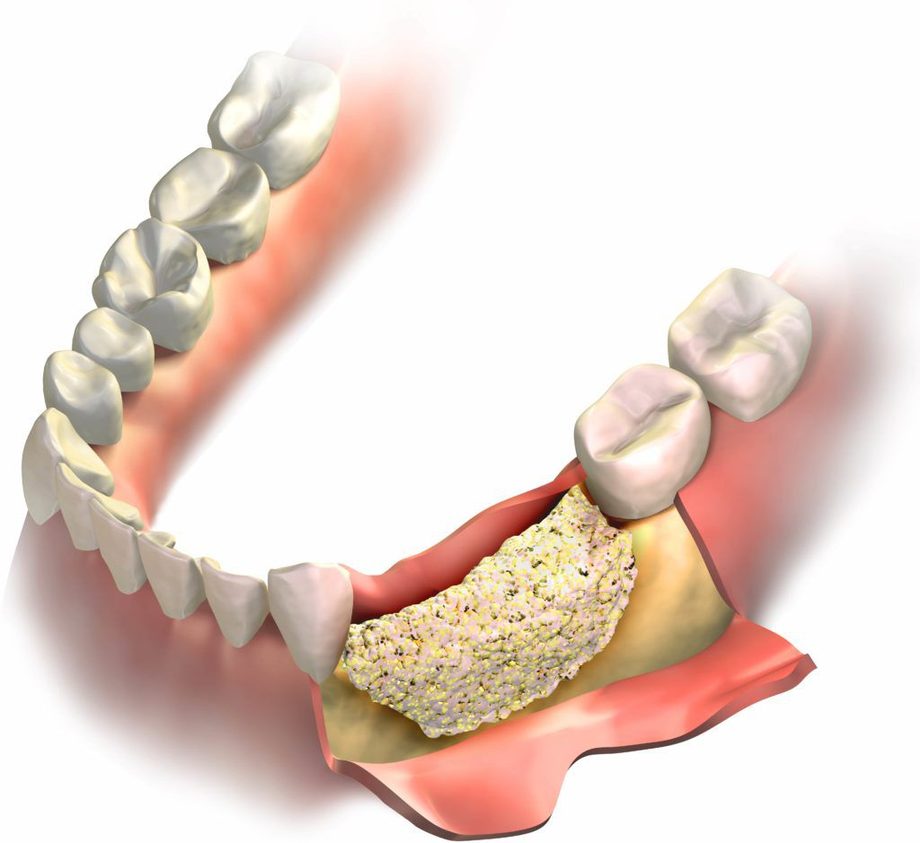
Prior to implant planning, the oral surgeon examines the patient’s CT scan in detail and determines the most suitable implant size based on the existing bone. If the bone volume is insufficient for implant placement, bone augmentation (bone grafting) is performed to restore it. The implant is then placed 6–9 months after the augmentation.
Bone grafting is the restoration of lost bone volume using specialized osteoplastic materials.
Bone graft materials can be classified as follows:
- Autogenous bone – the donor is the patient themselves.
- Allogeneic bone – a biomaterial from another human donor.
- Xenogeneic bone: bone material derived from an animal.
- Alloplastic bone – a synthetic osteoplastic material.
There are many effective bone augmentation techniques to address various dental treatment needs, the main ones being:
- Splitting of the alveolar ridge.
- Guided bone regeneration.
- Block bone grafting.
- Sinus lift.
At Masych Clinic, the Chief Dentist is highly skilled in all bone augmentation methods, ensuring the best possible outcome. Even in complex cases, the most appropriate and effective technique will be chosen for each patient.
Our results


- Implant prosthetics
- Zirconium crowns

- Implant prosthetics
- Zirconium crowns

- Implant prosthetics

- Implant prosthetics

- Ceramic veneers

- Zirconium crowns

- Ceramic veneers

- Whitening

- Whitening

- Zirconium crowns

- Zirconium crowns