


- Home
- Dentistry
- Dental prosthetics
- Metal-ceramic crowns
Metal-ceramic crowns

Metal-сeramic сrowns are not the most aesthetic solution
A decade ago, metal-ceramic crowns were considered the gold standard in prosthetic dentistry due to their strength and satisfactory aesthetic properties. However, over the past ten years, dental science has advanced rapidly. Clinical cases have been thoroughly analyzed, leading to the continuous implementation of innovative technologies and the elimination of previous limitations. Modern dentistry is moving toward aesthetics and biological rationality, as patients increasingly expect excellent treatment outcomes.
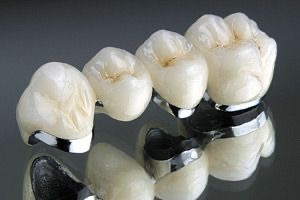
Drawbacks of metal-ceramic crowns
Compared to other types of crowns, such as all-ceramic and zirconia crowns, metal-ceramic crowns are significantly inferior due to the following disadvantages:
- The presence of metal in the oral cavity is one of the main disadvantages of metal-ceramic crowns. Under the influence of saliva, metal components may oxidize and release potentially harmful ions into the body. Many patients have metal sensitivities or allergies that may not manifest immediately. In addition, metal can irritate the gums which over time may develop a dark bluish discoloration and become inflamed.
- Because metal-ceramic crowns consist of a metal substructure layered with ceramic, they are relatively bulky in design. This requires more aggressive tooth preparation, meaning a larger amount of healthy tooth tissue must be reduced to allow the crown to fit comfortably and function properly.
- The metal framework of a metal-ceramic crown does not form a strong chemical bond with the ceramic veneer, which often results in chipping or cracking of the ceramic.
- Over time, the ceramic layer on a metal-ceramic crown wears down due to contact with the metal substructure. Consequently, these crowns often require regular replacement.
- Metal-ceramic crowns make it difficult to create a genuinely beautiful and natural-looking smile. Key aspects of an attractive smile — including a slightly translucent biting edge, perfect tooth shape, accurate anatomical contours, and healthy gums — are hard to achieve with metal-ceramic crowns.
- Metal-ceramic crowns are not manufactured using digital workflows, which significantly reduces the precision of the restoration. As a result, the crown may not fit the tooth preparation accurately and often requires multiple try-ins and adjustments.
- Metal-ceramic crowns typically need to be replaced within a few years. Poor fit can compromise the underlying tooth, which in some cases may result in the complete loss of the tooth.
There are only a few situations where our specialists at Masych Clinic might recommend a metal-ceramic crown. These include:
- Placement of a metal-ceramic bridge as support for a removable partial denture.
- Use of a metal-ceramic crown as a temporary restoration during orthodontic treatment.
Alternative to metal-ceramic crowns
Modern alternatives to metal-ceramic crowns include zirconia and pressed ceramic crowns.
At Masych Clinic, we prioritize the health of every patient and the aesthetic outcome of our work. You can be confident that our dental specialists will choose the most suitable restoration method for you, and metal-ceramic crowns will most likely be a thing of the past.
Metal-ceramic crowns
- Shaping one tooth for a crown/veneer 700 ₴
- Temporary composite crown (office-made) 700 ₴
- Temporary milled PMMA crown 1650 ₴
- Metal-ceramic crown with a shoulder margin 6400 ₴
- Metal-ceramic crown 5800 ₴
- Metal-ceramic crown 7900 ₴
Made with Laser Metal Sintering (LSM) technology
- Metal-ceramic crown on a dental implant 260 €
- Crown fixation with temporary cement 170 ₴
- Fixing the crown with glass ionomer cement 500 ₴
Metal-ceramic / zirconia
Our results


- Implant prosthetics
- Zirconium crowns

- Implant prosthetics
- Zirconium crowns

- Implant prosthetics

- Implant prosthetics

- Ceramic veneers

- Zirconium crowns

- Ceramic veneers

- Whitening

- Whitening

- Zirconium crowns

- Zirconium crowns